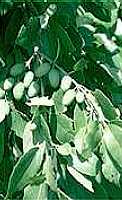
| DESCRIPTION: It is a shrub or tree reaching 3-20 m in height, with a straight bole, rough, dark grey bark that flakes longitudinally and a dense, rounded crown. USE: The fruit and seed are edible. The fruit has a high content of sugar and vitamin C. The fruit may be eaten boiled with sorghum. A beverage similar to tea is made from the leaves. The fruit and leaves can be used as fodder. The flowers are visited by bees. The wood is excellent for making furniture. The heartwood produces resin and dye. The roots have various medicinal uses. It is planted as an ornamental and is an effective shade tree and can also be used as a windbreak. GROWING PERIOD: Perennial. COMMON NAMES: bird plum, dog plum, mountain date, wild almond. FURTHER INF: It grows naturally in various climates, from semi-arid areas to areas receiving rainfall in 4 years out of 5. It is found scattered in semi-desert grassland, open woodland or at lower altitudes along river valleys, especially on termite mounds. It is common in riverine forests, Acacia-Commiphora-Balanites woodland and wooded grassland, Acacia woodland and bushland, and the miombo woodlands of Tanzania. It tolerates drought but is not resistant to frost or cold wind. |