View crop
View crop Data sheet EcoPortStylosanthes humilis
 |
|
| Notes |
|---|
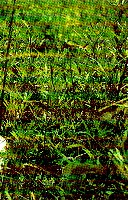
| DESCRIPTION: Prostrate to erect herbaceous legume 5-50 cm (-70 cm) tall. Leaves trifoliolate, terminal leaflet to 15 mm long and 3.5 mm wide. Flowers bright yellow. USE: Permanent pasture, grazing and hay. GROWING PERIOD: Summer annual. Seed can be sown when the frost danger in the spring is over. Pasture can be grazed from early summer to early fall, and then again after the first frost. It flowers over a period of 55-70 days and the seeds ripen over a similar time interval. COMMON NAMES: Townsville Lucerne. FURTHER INF: It is native of northern South America, southern Central America and parts of the Caribbean. It can be found at latitudes between 23°N-28°S, at elevations between sea level and 1800 m. It has a photoperiod of 12-14 hours. Winter rain is detrimental as it tends to cause secondary fungal infection on overwintering standing hay. Occurs in areas with 400 mm rainfall and pronounced dry season to areas with more than 3000 mm rainfall and a short dry season. Temperatures for optimum growth range between about 27-33°C. Plants are killed by frost, but ripe seed is normally set before frost. Occurs over a wide range of well drained soil from gravel, sands and sandy loams to clay, best on lighter soils. Adapted to soil pH between 4-6.5 and tolerant of Al, Mn and salinity. Dry matter yields of pure stands may be 1-6 t/ha. | Sources |
| Grassland Index Skerman P 1988 pp 419-434 [TEMP, KTMP, RAIN, LIMIT, DRA, DEP, TEXT, PH, SAL, FER] Rehm S 1991 pp 427 [FER, LIG, DRA] Duke J 1975 pp 28 [PH, RAIN, TEMP] Duke J 1981 pp 226-228 319 [PHO, TEMP, LIG, RAIN, FER, DRA, TEXT, PH] Bogdan A 1977 pp 402-409 [LIG, TEMP, RAIN, TEXT, DEP, DRA, PH] Bryant P 1973 pp 363-365 [TEXT, RAIN, DRA, KTMP, FER] Heath M 1985 pp 161 [LIG, RAIN, TEXT, FER, PH] Mannetje L 1992 pp 216-218 [RAIN, FER, TEXT, PH, SAL, LIG] Tropical forages 2005 |